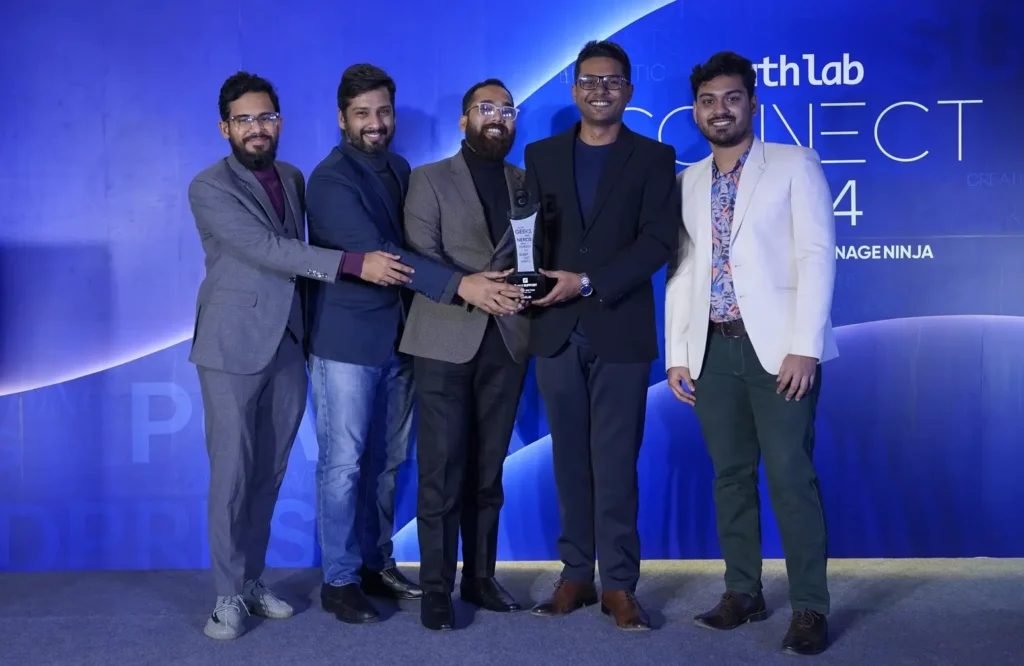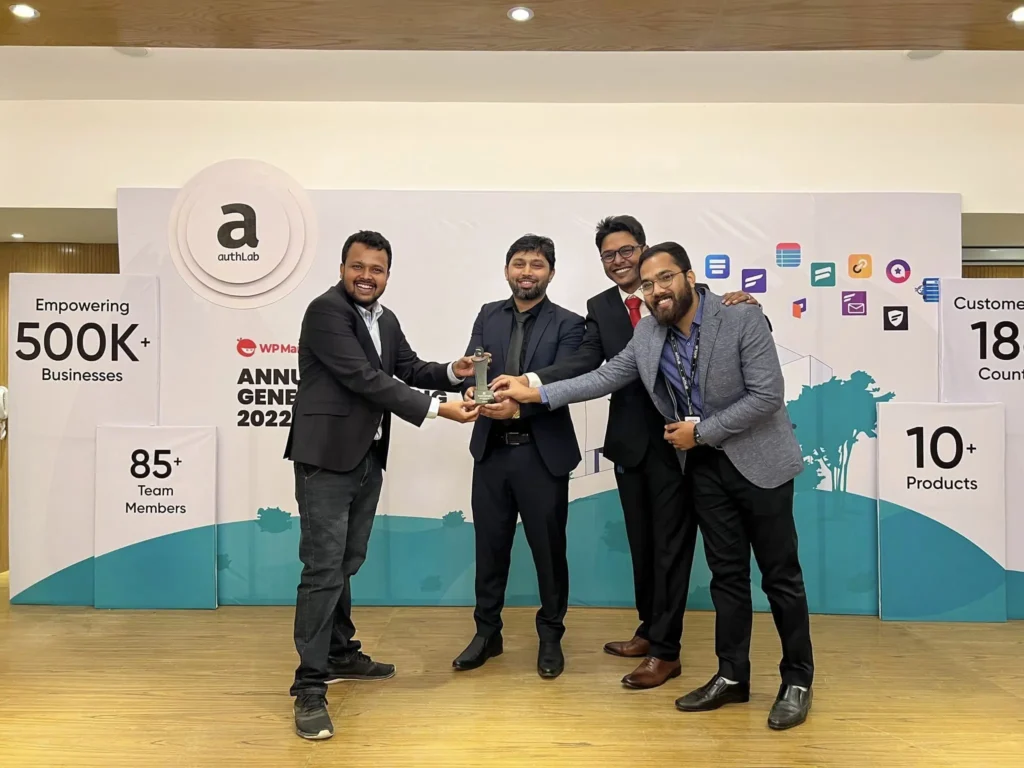
Four years. Four awards. One team that refuses to stop growing.
I want to be honest about something. Winning the Best Marketing Team Award for 3 consecutive years and The Best Product Launch Team Award last year is not something I take lightly. It is not a number I mention to sound impressive. If anything, it is a reminder. Every time it happens, the same realization returns: we are only here because of each other.

This is not a story about strategy decks, quarterly dashboards, or the clever mechanics behind campaigns. Those things matter, of course, but they are never the real story. The real story lives underneath all of that. It lives in the small human dynamics that rarely make their way into case studies. The quiet ways people trust each other, support each other, and take responsibility for something that belongs to everyone.
Looking back, the foundation of everything we built started with a deceptively simple decision. We decided very early that we would not build a team around a single brilliant individual. We would build a team where leadership was distributed.
That sounds idealistic when you say it out loud. In practice, it is extremely difficult.
Most teams slowly develop a gravitational center. There is always someone whose voice carries more weight in meetings, someone whose approval seems necessary before anything moves forward, someone whose opinion quietly ends the conversation. It often feels efficient in the short term because decisions move faster when authority concentrates in one place. But the long-term cost is enormous. The rest of the team gradually stops participating with the same conviction. People begin waiting rather than contributing. Ownership shrinks.
We were careful not to let that pattern form.
Leadership inside the team was practiced in a very simple way. Decisions were shared rather than guarded. Questions were directed not only toward the most senior voice in the room but also toward those who were still learning the ropes. When someone offered an idea, it was treated as a real contribution rather than a preliminary step before someone more experienced spoke.
Daniel Goleman describes this kind of leadership in The Emotionally Intelligent Leader when he writes that effective leaders are:
“exquisitely sensitive to the impact they are having on others and seamlessly adjust their style to get the best out of their people.”
Once people feel that their thoughts genuinely matter, something subtle begins to shift. They start taking ownership without being asked. And once ownership becomes natural, management becomes less necessary.
Another force that held the team together was belief. At the time we were operating in a niche that, at least from the outside, did not appear particularly glamorous. But inside the team there was a quiet conviction that the work mattered. The product we were promoting solved a genuine problem for people who needed it, and our role as marketers was simply to make sure those people could find it.
That belief created an energy that cannot be replicated through planning alone.
Seth Godin captures this idea clearly in This Is Marketing when he writes:
“Marketing is the generous act of helping someone solve a problem. Their problem. It’s a chance to change the culture for the better.”
When you believe that what you are building actually helps someone, the tone of your work changes. The way you write changes. The way you speak about the product changes. Even the quieter hours of the week begin to feel purposeful rather than mechanical. Passion that comes from conviction spreads quietly across a team. No one has to enforce it.
Culture also began to reveal itself as the most important strategic asset we had. Transparency was not something that appeared naturally. It was a decision repeated daily. It meant admitting when something was unclear rather than pretending confidence. It meant sharing disappointing numbers with the same openness as successful ones. It meant allowing disagreement to surface without immediately framing it as disruption.
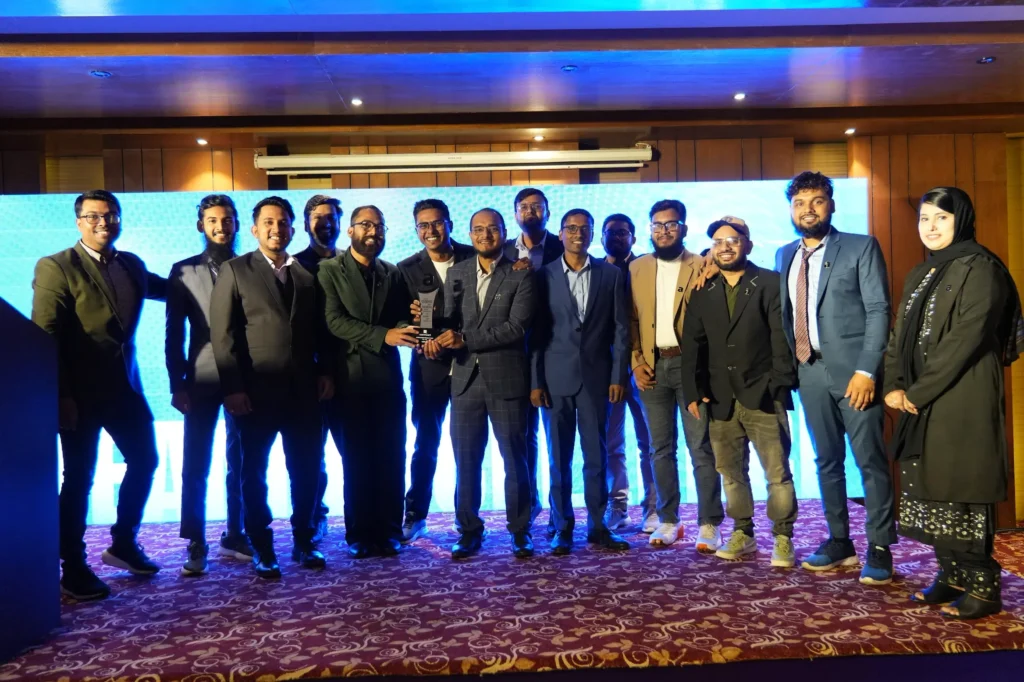
Over time that choice created a working environment where honesty felt safe. People were comfortable saying when they were stuck. Concerns raised during discussions were treated as useful information rather than complaints. As a result, problems surfaced earlier, ideas improved faster, and trust accumulated quietly in the background.
Goleman explains why environments like this work so effectively:
“Leaders who practice self-regulation are able to create an environment of trust and fairness. In such an environment, politics and infighting are sharply reduced and productivity is high.”
Seth Godin expresses the same principle from the perspective of marketing itself:
“Culture beats strategy—so much that culture is strategy.”
Another reality that shaped our work was the understanding that no one operates at full capacity all the time. Teams often pretend otherwise, but anyone who has worked long enough in a demanding environment knows that life occasionally intrudes on productivity. There are weeks when personal challenges weigh heavily on someone, when focus becomes harder to maintain, when the work that once felt effortless suddenly feels heavy.
In those moments the team never paused to assign responsibility formally. Someone simply stepped forward and absorbed part of the load. No announcement, no drama, no expectation of recognition. Just the quiet awareness that supporting each other was part of the job.
Goleman refers to the instinct behind this behavior as empathy:
“Empathy means thoughtfully considering employees’ feelings—along with other factors—in the process of making intelligent decisions.”
The important thing about this approach is that it creates a cycle. Someone receives support during a difficult stretch, and later they become the person who offers it to someone else. Over time the team becomes resilient because its strength does not depend on every individual performing perfectly at all times.
Energy within a team also moves in seasons. There are periods when one person seems to be operating at an extraordinary level of clarity and momentum. Ideas flow easily for them, their execution is sharp, and their enthusiasm lifts the entire room.
In those moments the smartest response is not to interrupt that momentum with unnecessary structure. The team clears obstacles, absorbs routine tasks, and allows that person to remain in the state where their creativity is strongest.
Eventually that season passes, as it always does. Another person begins to carry that energy. The rotation continues.
Goleman describes the psychological engine behind this persistence when he writes that people with strong achievement motivation:
“remain optimistic even when the score is against them.”
This rotation of leadership energy prevents burnout and ensures that every member of the team experiences what it feels like to be the one others rally around.
Roles inside the team were always understood as guidelines rather than strict borders. Everyone had defined responsibilities, but those definitions never functioned as walls. When something important was missing, someone stepped in to address it. When a task required attention and no one technically owned it, ownership emerged naturally.
Goleman calls this dimension of collaboration social skill:
“Social skill, rather, is friendliness with a purpose: moving people in the direction you desire… Nothing important gets done alone.”
This mindset also encouraged strategic thinking. Instead of reacting only when gaps appeared, the team learned to anticipate them and address them early. The difference between a reactive marketing team and a strategic one often lies in this simple habit of looking slightly further ahead.
Over time the team began to feel less like a collection of assigned roles and more like something Seth Godin describes as a tribe. In This Is Marketing he writes:
“A tribe doesn’t have to have a leader, but it often is populated with people who share interests, goals, and language.”
A tribe forms when people choose to belong rather than simply being placed together by organizational structure. When that sense of belonging exists, the work acquires a deeper meaning. People stop thinking of success as individual recognition and begin experiencing it as collective momentum.
At the same time, sustaining that environment requires constant attention to something many organizations treat as secondary: mental health. Emotional well-being is often described as a compassionate gesture, but in reality it is one of the most practical investments a team can make.
A person who feels respected thinks more clearly. A person who feels psychologically safe takes better creative risks. A person who feels heard brings their full attention to the work rather than quietly withdrawing.
Goleman highlights the importance of this affiliative leadership style when he writes:
“It strives to keep employees happy and to create harmony among them… building strong emotional bonds.”
These bonds are not built through grand gestures. They develop through small observations—checking in with someone who seems unusually quiet, acknowledging effort that might otherwise go unnoticed, celebrating incremental progress that keeps motivation alive.
Through all of this, one principle continued to prove itself repeatedly: the most underrated strategy in marketing is simply showing up consistently.
Seth Godin articulates this beautifully:
“The last step is often overlooked: show up—regularly, consistently, and generously, for years and years—to organize and lead and build confidence in the change you seek to make.”
What appears from the outside as sudden success is usually the result of long periods of quiet persistence. Campaigns evolve, tactics change, markets shift, but consistency accumulates into something that eventually becomes visible.
For anyone currently building a marketing team, the most valuable lesson from this experience is surprisingly straightforward. Stop trying to design the perfect team on paper and start focusing on creating the right environment for real people. Real people have uneven weeks, shifting energy levels, and complicated lives outside of work. When those realities are acknowledged rather than ignored, teams become stronger rather than weaker.
Credit should be given generously and immediately rather than saved for formal evaluations. Leadership opportunities should be offered sincerely rather than symbolically. And support should circulate through the group without anyone keeping score.
Over time something remarkable happens. The distinction between “my work” and “your work” begins to dissolve, replaced by a shared sense that everyone is responsible for the outcome.
Seth Godin summarizes the true objective of leadership with striking simplicity:
“The goal is for them to miss you if you did go away.”
In the end, the goal is not to construct a team that functions only under the guidance of a few individuals. The goal is to build something resilient enough that it continues to thrive because people believe in it and in each other.
Passion that is performed quickly becomes exhausting. Passion that is genuine becomes fuel. And when that fuel is shared among people who trust each other, the work begins to grow in ways that strategy alone could never produce.
The story, as it turns out, is never really about the awards. It is about the architecture of the team that made them possible. And, the quiet understanding that the best work still lies ahead.